
Why some materials fail in kitchens and bathrooms
The problem in wet areas isn’t spilled water - that gets wiped up. The problem is steam and constant humidity working in through edges and joints until it reaches the core of the material. Materials that absorb water swell at the edges first, and once an edge has swollen it never returns to shape.
So the right question isn’t “is this waterproof?” It’s “what does this look like after six months of daily steam?”
The right materials in detail
Flooring: SPC is the answer
SPC parquet is built on a stone-plastic core that doesn’t absorb water at all, which makes it the only practical parquet option for kitchens and bathrooms. From our range: Chinese waterproof SPC in light grey, 5 mm and Chinese SPC in dark beige.
Walls: marble alternative
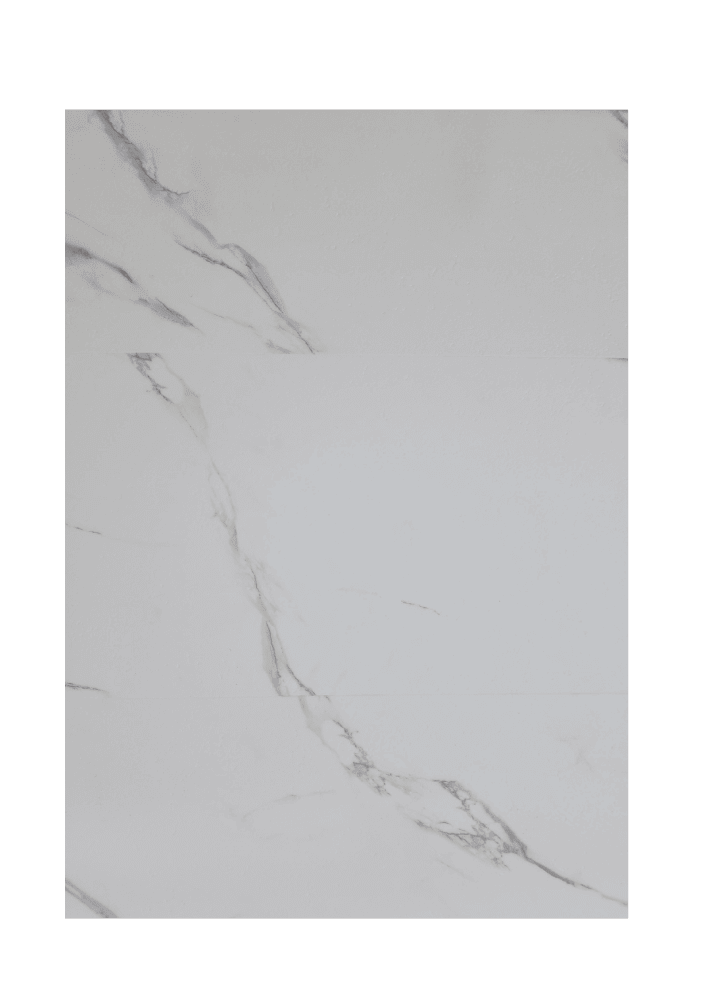
Marble alternative panels have a non-porous surface and are installed with few joints, which reduces the number of entry points for moisture. They suit the wall behind a basin or around a sink. Try sand-patterned marble alternative.
What to avoid
Natural wooden parquet and paper-backed wallpaper are not suitable for wet areas whatever their quality. Keep both for dry rooms and use stone or plastic-based materials wherever there’s steam.
Quick comparison table
| Material | Where | Handles constant steam | Note |
|---|---|---|---|
| SPC parquet | Kitchen and bathroom floors | Yes | The core doesn’t absorb water |
| Marble alternative | Wet walls | Yes | Non-porous surface, few joints |
| Wall cladding | Kitchen walls | Depends on type | Check the material in the product specs |
| Wooden parquet | Dry rooms only | No | Swells at the edges |
| Paper wallpaper | Dry rooms only | No | Peels with repeated steam |
How to choose for wet areas
- Start with the floor - it’s what pays for any leak first.
- Ask about the material and the core, not just the surface. A resistant surface over an absorbent core fails from the edges.
- Minimise joints where you can: larger panels mean fewer entry points for moisture.
- Pay attention to skirting and corners - most moisture problems start at the edge, not in the middle.
Early signs the material is starting to suffer
Moisture doesn’t ruin a material overnight. It signals months in advance. Watch for:
- A slight lift at the plank edges, felt underfoot before it’s visible.
- Localised colour change near the basin or under the sink.
- A hollow sound when walking over one specific area, which indicates the board has separated from the subfloor.
- Wallpaper edges beginning to lift from the top or from a corner.
Dealing with these early means replacing a board or two. Ignoring them for six months means replacing the floor.
Ventilation is part of the answer
No material removes the need for good ventilation. An extractor that actually works in the bathroom, and one over the hob in the kitchen, reduce the volume of steam reaching your surfaces more than any difference between one material and another.
That’s why we always suggest reviewing ventilation before replacing materials - sometimes the problem is in the air, not in the floor.
Why choose Texa Decor?
Every product’s specifications state the material and thickness clearly, so you know what you’re buying before you buy it. Our marble alternative and waterproof parquet ranges are built for exactly these uses, with measuring and professional installation.
Frequently asked questions
Can parquet be installed in a bathroom?
Standard wooden parquet is not recommended at all. SPC parquet is suitable, because its stone-plastic core doesn’t absorb water - provided installation is done properly with attention to edges and corners.
What’s the difference between “water-resistant” and “waterproof”?
Water-resistant survives brief exposure followed by wiping; waterproof means the material itself doesn’t absorb water and isn’t affected by it sitting there. In kitchens and bathrooms, choose the second.
Is cladding suitable for the kitchen wall behind the hob?
It depends on the type of cladding, its material, and how close it sits to direct heat. Check the product specifications, and contact us before buying so we can recommend what suits that position specifically.
A tip before you begin
Check the plumbing and confirm there’s no existing leak before installing any new floor or cladding. The best waterproof material on the market will not save a floor sitting over a dripping pipe.
Leave a Reply